Answer a few questions. Get a programme with a reason for every number.
Your goal, your training age, the days you have, the kit in your gym, anything you need to protect. Emberlift turns that into a week — and tells you, in plain words, why each part is there and what it left out.
Four steps, about five minutes.
Screening
A short health screen first — the questions a coach is obliged to ask. If something needs a doctor’s word before heavy work, it says so and stops there.
Assessment
Goal, training age, which weekdays, equipment, and — if you want a look rather than a number — the shape you’re after. Age is taken into account, not ignored. Quit halfway and it reopens on the question you were on.
Your week
A rotating programme with its reasoning attached: why this split, why these exercises, where the rest days fall and why. Every part is editable; the coaching follows your edits.
Coaching
Before each workout it briefs you: which day, what you did last time on each lift, what to aim for tonight. In the gym it warms you up with the lift itself, runs the rest timer on your lock screen, asks one question per exercise, and reads your sets.
What the app actually does, and what it says while doing it.
The cards on the right are the app’s own words — the kind of line you see on the session screen, not marketing.
Volume that’s yours
Weekly set targets per muscle come from the volume literature — a floor where growth starts, a ceiling where more stops helping — then scale with your level, your goal and your age. The Muscles screen counts what you’ve done against them, honestly: work for your joints isn’t counted as muscle growth, and a muscle that only helped isn’t credited as if it led.
When you’re over, it says that too, and names the exercise to drop.
Rest placed by recovery
Each muscle has its own clock. Big groups take longer than small ones, hard sessions longer than light ones, and soreness pushes it further out. The clock decides where rest days go in your week — and on the day, it tells you which muscles are ready and which want until tomorrow evening.
Older lifters recover more slowly; the clock knows, and the plan adjusts the dose and the pace — never the ambition.
Progression that reacts
For size: double progression — reach the top of the rep range with reps to spare and the weight goes up; stall twice and it backs off. For strength: a percentage wave, three weeks up and one back, off a training max it re-tests at the end of every cycle.
After your first set of each exercise it asks one thing — how many more reps you had in you — and uses the answer to steer the rest of the session and the next one. It says what to lift, set by set, rather than explaining the rule.
When the reps at one weight stop climbing for three workouts, the muscle isn’t short of work — it’s short of rest. The coach prescribes the easier session: same weight, half the sets, then a restart a little lighter so there’s room to climb again.
Built for a shape
“Aesthetic” is a goal, not a vibe. Pick the look — V-taper, athletic, lower-body — and the plan pushes the muscles that build it, holds the rest at maintenance, quietly leaves out the ones that work against it, and orders each day so the work that matters comes first.
Six-week blocks, so a priority doesn’t become a permanent imbalance.
Real gym, real life
Machine taken? “Machine busy?” offers ranked substitutes for the same job — and can make the swap permanent if you prefer the new one. Forgot to press finish? A reminder arrives after fifteen minutes. Came back an hour later, or the next day? The session reopens on the exercise you were doing, dated the day you finish.
Added an exercise by mistake, or the rack never cleared? Remove it from today without touching the plan.
A library with judgement
Two hundred-plus exercises, each tagged with what it trains, how well, and the lowest level it’s sensible to programme for someone coaching themselves from a phone. Technique cues and a demo video for every one — the Olympic lifts included — and an opinion about which to reach for when two would do.
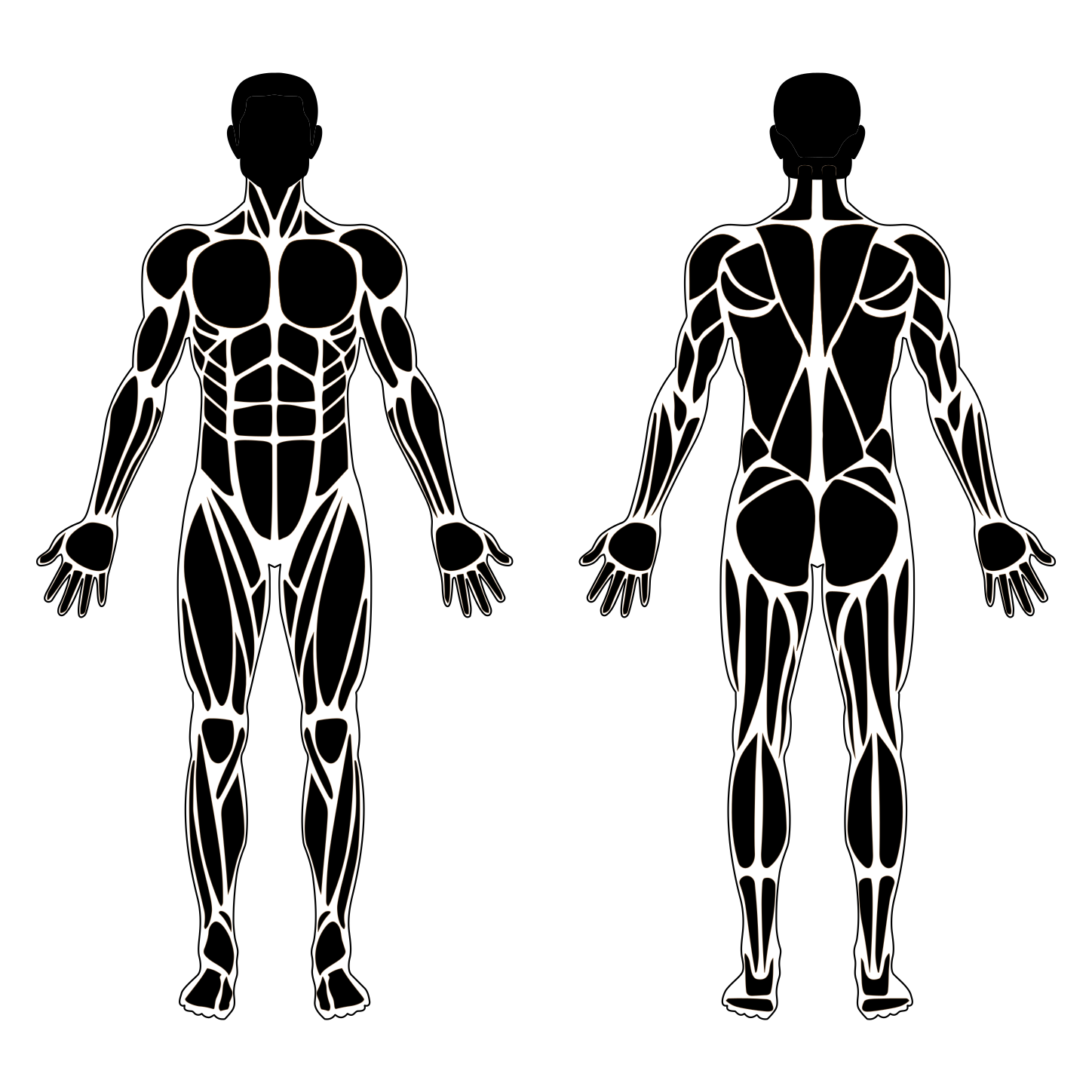
Add your own day by day from the library, with the same grading applied. A close-up muscle atlas lets you tap a muscle and see what trains it.
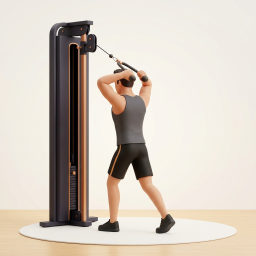
Warm up with the lift, not a ritual
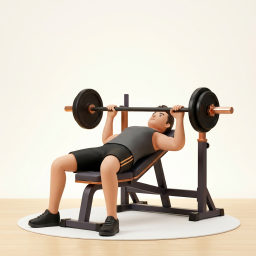
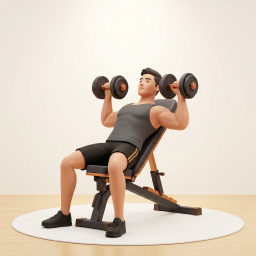
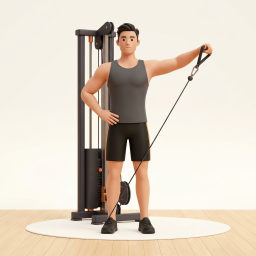
Before your first working set it ramps you up with the lift itself — the half of warming up that measurably does something. Movement prep is derived from the patterns on the day, the wind-down stretches from the muscles the day actually trained; edit the day and both lists follow.
Nothing before lifting is a held stretch, because holds cost force. And it never claims a warm-up prevents injury — nobody has shown that in a gym, so the app doesn’t say it.
A coach with a screen of its own
The Coach tile on the home screen says when there’s something to read. Before your next workout: which day is next, what you did last time on each exercise, and what to aim for tonight. Then the week’s notes — a muscle that needs a set, one that needs an easier week, a lift that has stopped moving — each with reply chips that change your routine for you, and a Why? underneath with the rule in the same plain words.
It judges the whole week, counting the sessions still to come, and it checks your plan before it asks: if the routine already gives a muscle enough, it says so instead of asking again, and it refuses to add a set past the most that helps. It watches the clock too — if the next day trains a muscle that’s still recovering it offers to swap a day forward, and after a week or more off it takes a step off every weight for your first one back.
On Sunday it reviews the week: what went well, where the growth came from, what to watch. After four full weeks it reviews the month — the days you kept against the days you planned, whether the sets are climbing, which lifts moved. A quiet week is called a quiet week.
Records that tell the story. A body plan that shows its working.
A personal record is the set that earned it, counted once — not twice because it broke your best weight and your best estimated max at the same time. Each card says what it beat, and each exercise shows the climb that led there. Share a finished workout as a card for your stories, with the calories only if your Apple Watch measured them.
On the Body screen: calories, protein and weight as three rings, a plan — cut, maintain or bulk — at a pace, and a weight trend over weeks. Where a faster pace would sit there’s a sentence saying why it isn’t offered.
It’s in beta now, on iPhone and Android.
Free during the beta. Nothing leaves your phone.